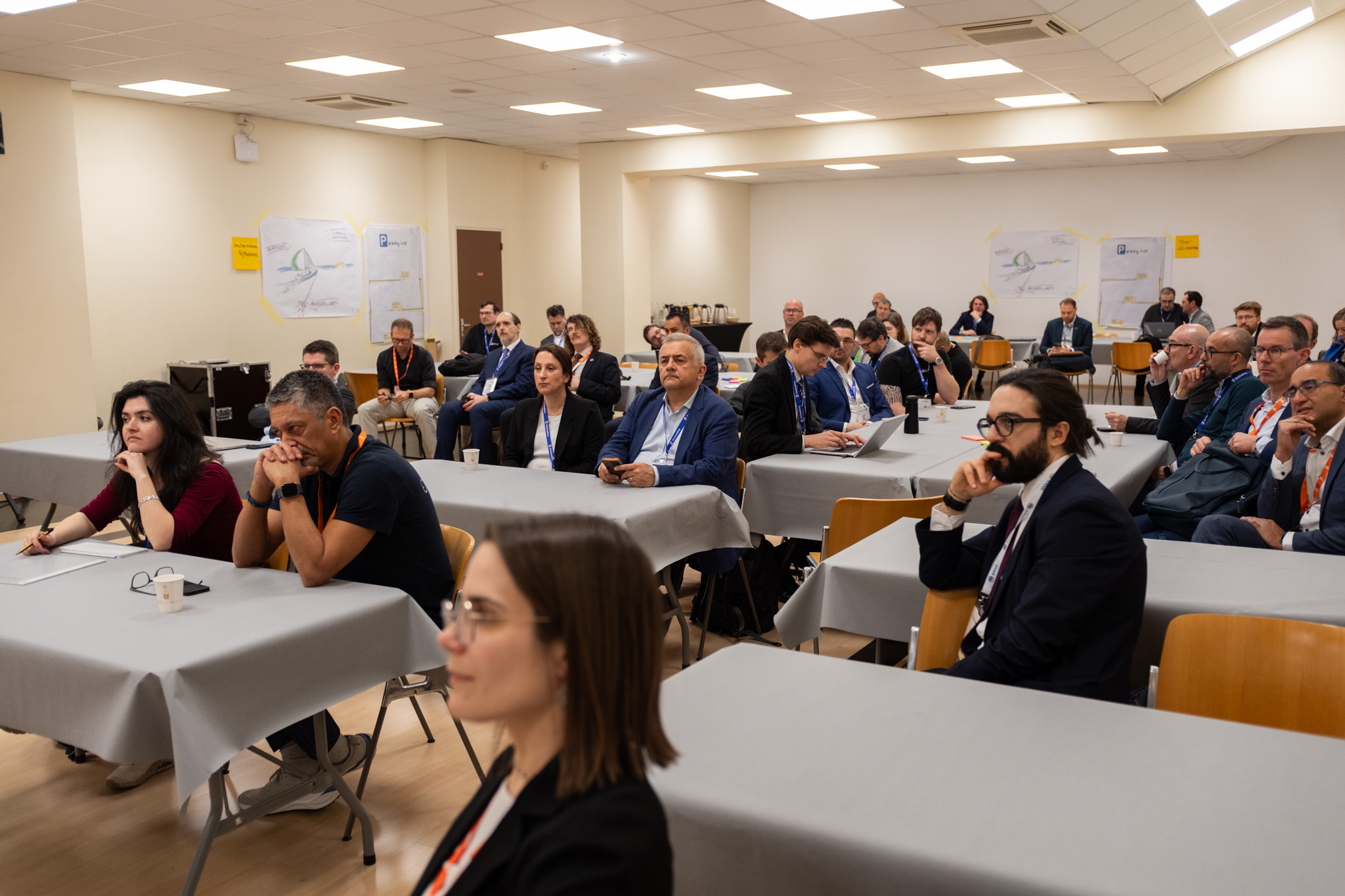
The Teaming Up for Cyber event, hosted by the European Champions Alliance (ECA) at the INCYBER Forum 2026 in Lille, marked a pivotal moment for the European cybersecurity ecosystem. By gathering a diverse group of stakeholders, including CISOs, prestigious institutions like the Fraunhofer Institute, the Dutch Ministry of Finance, various universities, and agile startups, the event successfully bridged the gap between deep technical expertise and strategic policy.
The primary objective was to move beyond simple discussion and initiate a structured process to improve relationships between market players while issuing actionable recommendations to institutions and industry leaders. While the participants acknowledged that Europe possesses immense academic and technical potential, they also highlighted the urgent need to address current ecosystem fragmentation to protect European digital sovereignty against evolving, AI-driven threats and the looming quantum challenge.The core outcome of this collaboration is a comprehensive Position Paper that focuses on four critical technological pillars: AI Security, Vulnerability Management, Industrial Systems (OT) Security, and Post-Quantum Cryptography (PQC).
Ultimately, the paper stresses that the stakes are too high for these critical topics to remain confined to “expert rooms” and calls for a “collaboration beyond competition” approach among European actors to achieve global autonomy. This strategic roadmap serves as a call to action for decision-makers and institutions to enforce the adoption of European solutions and develop industry-specific standards. The dialogue initiated in Lille is set to continue with follow-up meetings scheduled for end of June 2026 to monitor the progress of these initiatives and further refine Europe’s collective defence posture.
Regarding AI Security, the group emphasized the importance of secure models and pipelines while proposing the establishment of a European Center of Excellence to build resilient, EU-based supply chains.
Some of our members are leaders on this field. On another side, the ECA has gathered a set of European Corps to work on a common technological stack from data orchestration to AI secure architecture and governance. We will make sure the issue of controlling the immunity of AI systems to attacks and compromission is high in the agenda.
Another issue is AI-aided attacks detection and stopping. The developments around CLAUDE MYTHOS show that we are entering a period of uncertainty. It’s not only a question of guessing who will run faster between attackers and good guys, it’s also a matter of probable reshuffling of positions among the cybersecurity vendors community. This point will be on the agenda of the online Webinars we set up in May-June.
For Vulnerability Management, the recommendation is a transition from static, “one-shot” audits to a state of permanent, continuous assessment prioritized by business impact.
In the realm of OT Security, the paper advocates for unified governance at the board level and suggests that large European corporations act as “anchor customers” to help local vendors scale their offerings.
Therefore, we want to reach out to a bunch of top brass industrial CORPs leaders, with whom to explore the idea of them setting a minimum common set of cyber needs, which vendors could themselves translate into a joint design/delivery approach. We expect to organize this process with Dutch, French and German stakeholders, during the first half of June. Any interested industrial party can propose to join the process by writing to …
Finally, to address the “Harvest Now, Decrypt Later” threat in Post-Quantum Cryptography, the ECA recommends immediate cryptographic inventories, a European PQC Observatory, and regulatory mandates via NIS2 to ensure a full transition to quantum-resistant standards by 2030. As experts converge on the necessity to start acting, it’s more a question of making sure the political level gets better aware and pushes in the right direction. We are now reaching out to EU Parliament and national Parliament members, to organize action.