This year’s InCyber Forum will stand out as a transitional edition. Perhaps slightly less packed in volume than previous years, but clearly more mature in the nature of the discussions, the intentions expressed, and the perspectives shared.
Here are the key takeaways:
High-Quality Exchanges Well Above Average
What struck us first was the quality of interactions. Despite slightly lower attendance, discussions were deeper, more concrete, and above all, more sincere. We were clearly beyond mere commercial presence or the “echo chambers” sometimes seen at these types of events. There was a genuine desire to dive deep into the topics at hand.
From Awareness to a Will for European Action
We are also sensing an interesting shift: from discourse to action. For several years, the idea of a more “European” cybersecurity has reached a consensus. But this time, I felt a more concrete desire to move to the next stage. This is true for software vendors, who know their individual size remains a hurdle against international giants, but also, and this is newer, among certain integrators.
Traditionally opportunistic in their choice of solutions, several integrators are now mentioning growing pressure from their clients: an explicit demand to reduce dependence on (often American) solutions and the necessity to build real roadmaps to achieve this. We are only at the beginning, but the movement is well underway.
An Assertive Internationalization
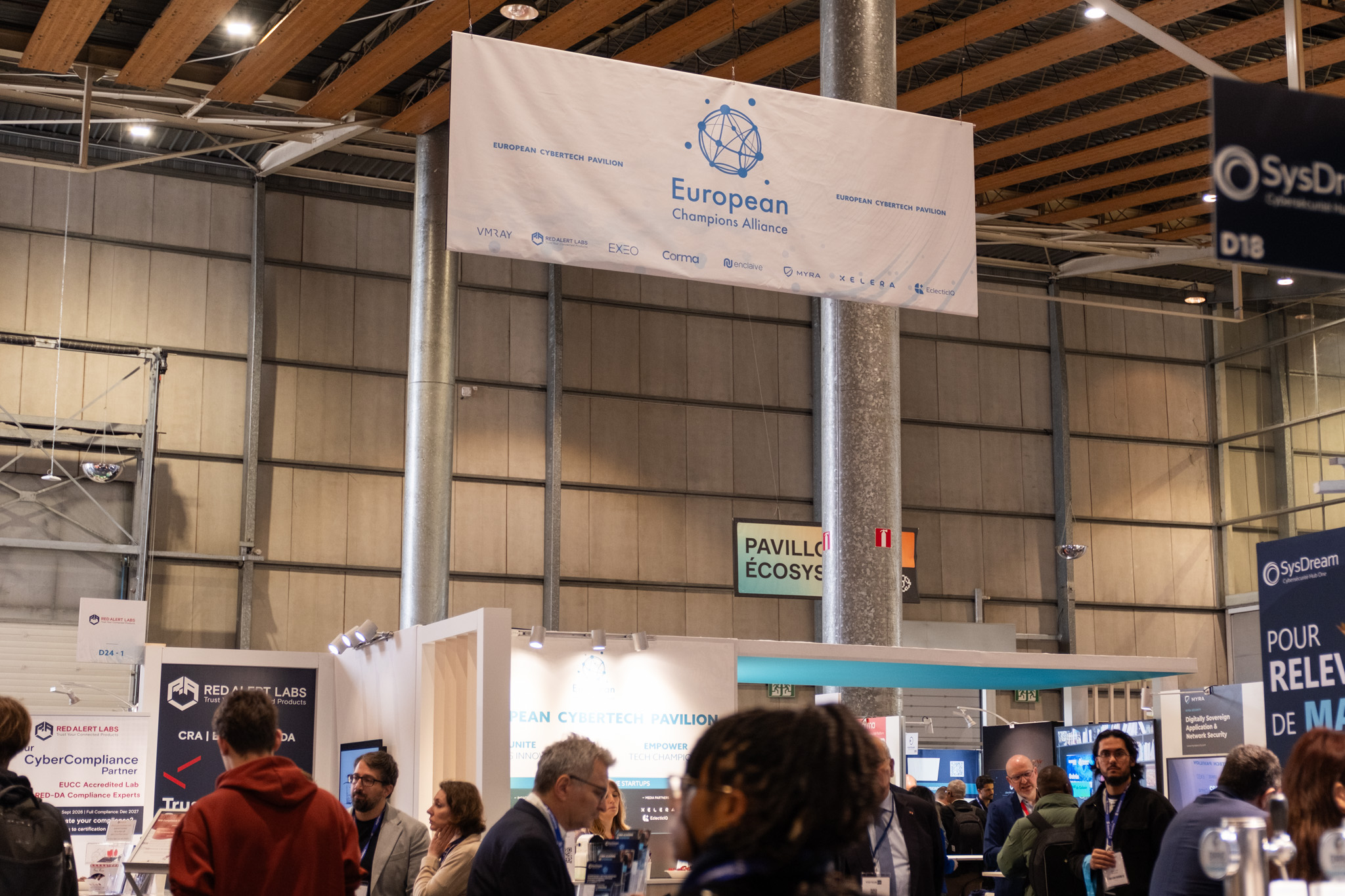
Another strong signal was the international dimension of the event. Certain delegations, such as the Swiss or the Dutch, were particularly visible, confirming their well-known commitment. However, new countries also appeared with structured booths, notably Italy and Poland, alongside historical players like Belgium and Luxembourg. For its part, the ECA also welcomed representatives from other countries, such as Slovenia.
This reflects a major evolution: the Cyber Forum, initially very French-centric, is progressively becoming an attractive European platform for cybersecurity stakeholders.
Concrete Interactions and Developing Collaborations
On the ground, the quality of networking was remarkable. The vendors present at our booths benefited from exchanges with stakeholders genuinely interested in their solutions, not just passers-by, but qualified, engaged profiles in the midst of strategic reflection.
The feedback is clear: almost all companies expressed satisfaction with the level of contact. Notably, their intention to return next year was expressed without hesitation, which is rare. Beyond commercial exchanges, we were also struck by the quality of interactions between the players themselves, especially with new startups. Several introductions, particularly between German and French startups, revealed obvious complementarities with real potential for joint value creation.
A Demanding but Productive “Teaming Up” Format
With our “Teaming Up” event, we tested a deliberately demanding format. Far from classic conferences, these were working workshops bringing together researchers, vendors, and users with a clear objective: to produce concrete recommendations on advanced cybersecurity topics.
This format requires more commitment from participants, but it clearly worked. The exchanges were rich, structured, and action-oriented. The diversity of participants, researchers from Germany, France, and the Netherlands; vendors from those same countries as well as Switzerland and Belgium; and CISOs providing rigorous field feedback, was not an obstacle, but rather a factor of enrichment. The ECA is particularly pleased to have engaged many CISOs from diverse backgrounds; we are well aware of the constraints of their role, which often makes participating in such events difficult.
While work remains to formalize the results, the momentum is very encouraging. Stay tuned!
The European Mapping as a Structuring Tool
The European Mapping confirms its role as a structuring framework. After successful presentations in Paris and Berlin, we took a step further by materializing it into a physical book. This hard-copy format amplified its impact: many stakeholders were impressed by the scale and depth of the work.
Beyond the format, it is the utility that stands out. The Mapping allows for a concrete visualization of the cybersecurity ecosystem on a European scale and is becoming a reference tool for understanding current dynamics. It also clearly contributes to strengthening the visibility and credibility of our initiative.
A Lesson in European Pragmatism on Sovereignty
Finally, an exchange regarding the French initiative for a “Digital Dependency Index” was particularly enlightening. The discussion focused on its expansion to a European scale, with representatives from German, Dutch, and other ecosystems.
The key takeaway was the approach: rather than pushing “European Sovereignty” in a frontal way, which can sometimes be perceived as political or abstract—the proposed approach starts with the concrete. It aims to help Executive Boards (COMEX) measure their digital risks and then structure plans to reduce those risks. It is through this pragmatic, business-oriented lens that the question of sovereignty can be introduced effectively and inclusively. This approach avoids posturing and facilitates genuine European cooperation.
Conclusion
This Cyber Forum marks a significant evolution. Less about demonstration, more about construction. Less about talk, more about action. Above all, we are seeing a European cybersecurity landscape that is starting to structure itself in a more concrete, pragmatic, and collaborative way.