Mapping Europe’s Cybersecurity Ecosystem: Building the Foundations of Digital Sovereignty
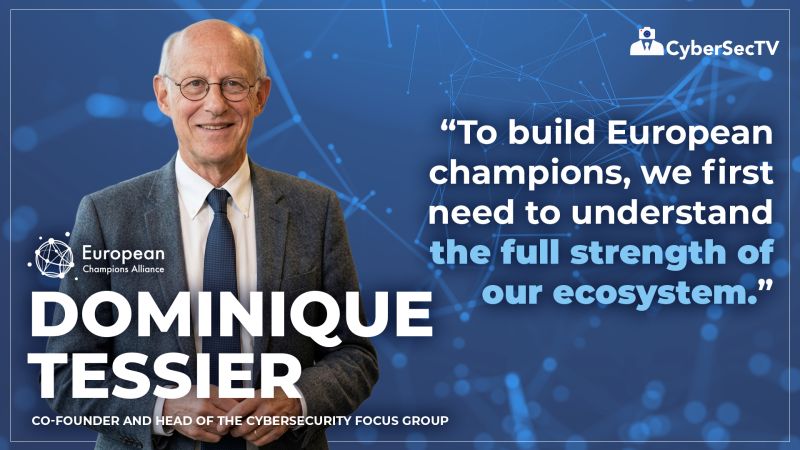
In an interview with CyberSecTV.eu, Dominique Tessier, Co-Founder and Head of the Cybersecurity Focus Group at the European Champions Alliance (ECA), discusses one of Europe’s most ambitious initiatives in the field of cybersecurity: the European Cybersecurity Mapping.
A fragmented but highly dynamic ecosystem
Europe’s cybersecurity ecosystem is rich, diverse, and highly innovative. However, this strength comes with a structural complexity: the market remains highly fragmented across countries, technologies, and maturity levels.
To address this, the European Cybersecurity Mapping has identified more than 1,300 cybersecurity vendors across 24 European countries, offering one of the most detailed overviews of the sector to date.
The goal is not only to list companies, but to:
- structure the ecosystem into clear technological domains
- highlight strategic areas of strength
- improve visibility across the value chain
- support better decision-making for industry and policymakers
By making the ecosystem readable, the Mapping creates the foundation for strategic action.
From visibility to strategic understanding
One of the key messages highlighted by Dominique Tessier is the importance of understanding before acting.
Without a clear picture of the ecosystem, it becomes difficult to:
- identify critical technologies
- assess dependencies
- understand investment gaps
- or design effective industrial strategies
The Mapping therefore acts as a strategic tool, helping translate complexity into actionable intelligence for stakeholders across Europe.
Cybersecurity as a pillar of European sovereignty
Cybersecurity is no longer only a technical domain. It has become a core component of European digital sovereignty.
As digital infrastructures expand and cyber threats intensify, Europe must ensure it can rely on its own technological capabilities to protect:
- critical infrastructures
- data and digital services
- businesses and citizens
The Mapping helps identify where Europe is strong, but also where strategic gaps may still exist.
In this sense, it directly contributes to a broader sovereignty agenda.
The challenge: turning fragmentation into scale
A recurring theme in the discussion is Europe’s structural challenge: while innovation is abundant, scale remains limited.
Many companies operate successfully within their niche or national market, but struggle to grow into larger international players.
This raises a central question for the ecosystem:
how can Europe transform a fragmented innovation base into globally competitive industrial champions?
For Dominique Tessier, addressing this challenge is essential if Europe wants to strengthen its position in the global cybersecurity landscape.
Enabling European cybersecurity champions
The Mapping initiative is closely linked to a broader ambition: supporting the emergence of European cybersecurity champions.
Achieving this requires more than technological excellence. It involves:
- stronger industrial cooperation across Europe
- improved access to investment for scale-ups
- consolidation where it creates strategic value
- and better alignment between public and private stakeholders
The objective is to move from a collection of strong individual players to a more coordinated and competitive ecosystem.
A collective effort for the future
Building a resilient cybersecurity ecosystem in Europe is not the responsibility of a single actor.
It requires coordination between:
- innovative companies
- investors and financial institutions
- industry associations
- and public authorities
Only through this collective approach can Europe strengthen its industrial base and global competitiveness in cybersecurity.
Conclusion: understanding the ecosystem to transform it
The European Cybersecurity Mapping is more than an analytical exercise. It is a strategic foundation for Europe’s future in cybersecurity.
As Dominique Tessier emphasizes in the interview, the first step toward building European champions is simple but fundamental: fully understanding the strength and structure of the ecosystem.
By making this ecosystem visible, structured, and intelligible, Europe equips itself with the tools needed to move from fragmentation to leadership.
The challenge ahead is clear: turning insight into action, and innovation into scale.
The initiative aims to provide a structured and comprehensive view of the European cybersecurity landscape at a time when fragmentation remains one of the continent’s key challenges.